
July 23, 2026
3D Printing Tabletop Miniatures: Resin or FDM, and How Not to Ruin the Small Details
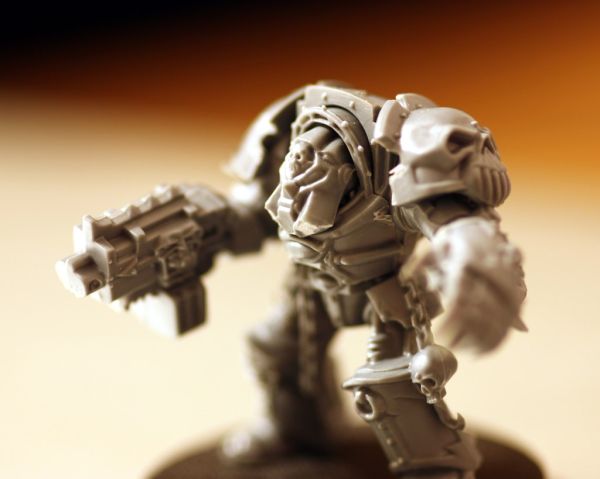
If you need a miniature for Warhammer, D&D, or a homebrew tabletop game, it's almost always resin printing (SLA/DLP), not a regular FDM printer with a spool of filament. The difference isn't price — it's that the two technologies handle small detail in physically different ways.
Why not FDM
An FDM printer lays down plastic in layers through a nozzle, with a typical layer height of 0.1-0.2 mm. That's fine for a box body or a stand. For a 28 mm-tall figure's face, where you need to capture facial features, fabric folds, and a tiny weapon in the hands — the layers will show, and thin details like a spear or fingers simply won't print cleanly or will snap off during removal from the build plate.
A resin printer flashes an entire layer at once with UV light through an LCD screen, with layers around 0.02-0.05 mm — an order of magnitude thinner. That's where the smooth surface and crisp small details without visible stepping come from.
What affects the price
Scale. 28 mm (the standard for most tabletop games) prints cheaper than 32 mm or 54 mm — the larger scales simply use more resin volume and more support area.
Support count. A figure in a dynamic pose (a flowing cloak, a raised weapon) needs more supports than one standing straight — that means more post-processing time (support removal, cleanup).
Material. Standard resin is cheaper but more brittle. Engineering/tough resin holds up better to impact — for figures that will get handled a lot during play, that can matter more than price.
Post-processing. Washing in isopropyl alcohol and UV curing are mandatory — without them the resin stays tacky and never reaches full strength. If you want it painted, that's a separate service — not every maker offers it.
What to ask a maker
Ask about the printer's build plate size — if you're ordering a large scene or several figures at once, it matters whether they fit in one print cycle or need multiple runs (which can raise both price and turnaround).
It's also worth asking about experience with the specific type of model — tabletop miniatures are often sold as STL files by independent designers (Patreon sculptors), and file quality varies a lot; some need manual support rework for a specific printer.
Estimate the price yourself
Want to know what a miniature print actually costs with your own numbers (resin volume, exposure time, post-processing cost)? The 3D Print Pricing calculator lets you quickly estimate the cost of resin printing, including printer and UV station depreciation — not just the price of the resin itself.
Calculate your price in a minute
Free calculator: part weight, print time, material price — no sign-up needed.
 App Store
 Google Play
 RuStore