
July 4, 2026
ABS Filament vs. ABS-Like Resin: What's the Difference?
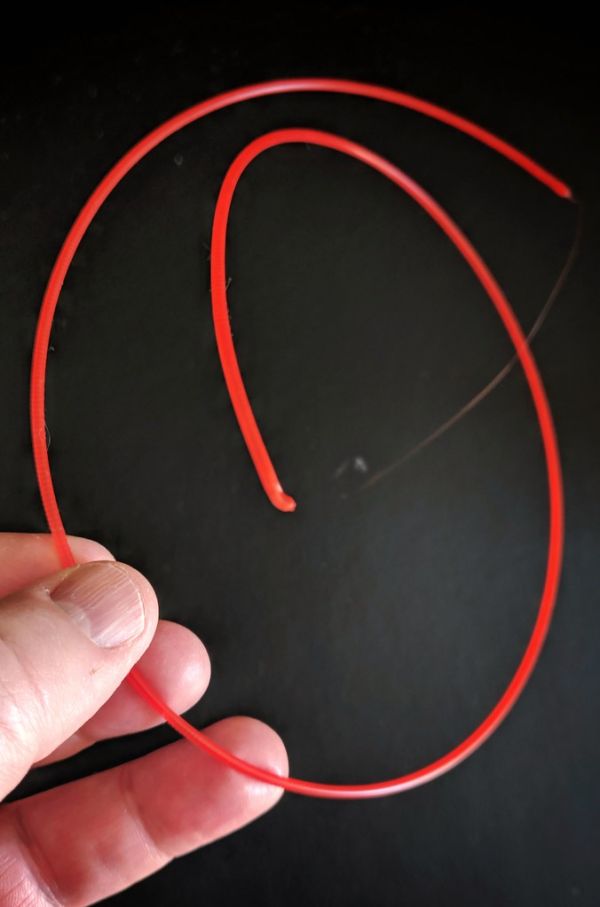
The name "ABS" shows up in two unrelated technologies — FDM ABS filament and photopolymer ABS-like (also called tough) resin for SLA/LCD printers. These aren't the same material — they're two different plastics that share only a marketing claim about similar finished-part properties.
Different raw material, different technology
ABS filament is a thermoplastic (acrylonitrile butadiene styrene) that melts in a nozzle and is laid down layer by layer, like any FDM material. More detail in the ABS material reference.
ABS-like resin is a liquid photopolymer for SLA/LCD printers, cured layer by layer with UV light in a vat. "ABS-like" is a marketing term — resin makers use it for formulas that bring cured impact resistance closer to ABS plastic, but chemically it's a completely different substance (an acrylate photopolymer, not a thermoplastic).
Key differences
| ABS (filament) | ABS-like resin | |
|---|---|---|
| Technology | FDM | SLA/LCD |
| State before printing | solid spool | liquid in a bottle |
| Enclosure needed | yes | no (needs UV-safe darkness instead) |
| Post-processing | not required | washing in IPA + UV curing required |
| Toxicity | fumes during printing | resin is toxic before curing |
| Detail level | medium | high |
| Typical use | functional parts, enclosures | miniatures, high-detail prototypes |
Which one to choose
If you need a large functional part that can take a load and doesn't require a flawless surface, go with ABS filament — it's cheaper and needs no post-processing. If detail and a smooth surface on a small part matter more than impact strength, ABS-like resin gives a better-looking result, but adds time and consumables for washing and curing.
How it affects cost
These two "ABS" materials are costed with completely different formulas: filament is material (grams × price) plus electricity for heating the enclosure and bed; resin is material (milliliters × price) plus post-processing (IPA, ultrasonic bath, UV station), which filament simply doesn't have. Mixing these two up in a cost calculation is a common mistake that underprices resin printing when it's costed out of habit like ordinary filament.
Calculate your price in a minute
Free calculator: part weight, print time, material price — no sign-up needed.
 App Store
 Google Play
 RuStore