
August 1, 2026
Fire Safety for Unattended and 24/7 Print Farms: What Actually Reduces Risk
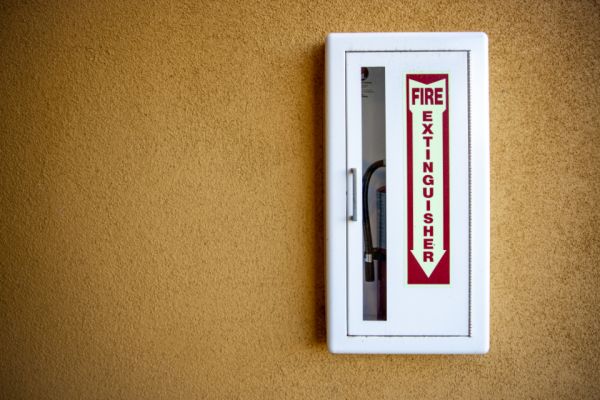
Every major printer manufacturer's manual includes some version of "do not leave the machine running unattended." Almost nobody follows that literally — overnight prints and 24/7 farms are standard practice, hobbyist and commercial alike, because a printer that only runs while someone's watching it is a printer running at a fraction of its useful capacity. Documented house fires attributable to 3D printers happen every year. Not common relative to the number of printers running worldwide, but real enough that it's worth a level-headed mitigation plan rather than either ignoring it or being talked out of running unattended altogether.
The point isn't "never leave it unattended"
That advice, taken literally, would mean never running a farm at real capacity. The more useful question is how to reduce the risk while still running the way the business actually needs to run. None of what follows is exotic or expensive — it's a short stack of cheap layers, roughly in order of cost and effort.
The mitigation stack
Smoke detector. The cheapest, most basic layer, and the one with no excuse to skip: a standalone smoke detector in the room, positioned near the print area rather than just wherever a house already has one. If nothing else on this list gets done, this one should.
Carbon monoxide detector. For an enclosed farm room or anywhere ventilation is limited, add a CO detector alongside the smoke detector. A smoldering electrical fault — a bad connector, an overheating stepper driver — can produce carbon monoxide before it produces visible smoke, and CO doesn't announce itself the way smoke does.
Smart plugs with a kill switch. Outlets that can cut power automatically on smoke or abnormal-current detection add an active layer on top of passive detection. At minimum, even a basic smart plug that just lets you remotely kill power to a printer from your phone is worth having — if a detector goes off at 3 a.m., being able to cut power to the whole rack from bed beats driving over.
Placement. Keep printers away from combustible clutter — cardboard boxes, spare filament spools stacked against the machine, paper. Put them on a non-flammable surface with real clearance around them, not wedged between other equipment. This is the free layer: it costs nothing but a bit of room-arranging.
Insurance. Worth saying plainly: a standard home or business policy may not automatically cover a fire caused by equipment left running unattended — that's exactly the kind of exclusion insurers write into policies. Don't assume either way. A direct conversation with your insurer about what's actually covered for unattended print equipment is worth the phone call before it becomes relevant.
None of this is a reason to stop running unattended — it's standard, necessary practice for any farm doing real volume. The mitigation stack above costs a fraction of what a single printer earns in a month, which is the same kind of comparison worth running before adding capacity in the first place.
Calculate your price in a minute
Free calculator: part weight, print time, material price — no sign-up needed.
 App Store
 Google Play
 RuStore
Bottom line
The risk is real but manageable, not a reason to abandon unattended printing. A smoke detector, a CO detector where ventilation is limited, remote kill-switch capability, sane placement away from combustible clutter, and an actual conversation with your insurer — that's a cheap, practical stack that meaningfully reduces risk without meaningfully changing how the farm operates. Check your printer fleet's setup at /3d-printers and factor placement and monitoring into how you scale it.