
July 4, 2026
Post-Processing Resin Prints: Washing, Drying, Curing — and How to Cost It
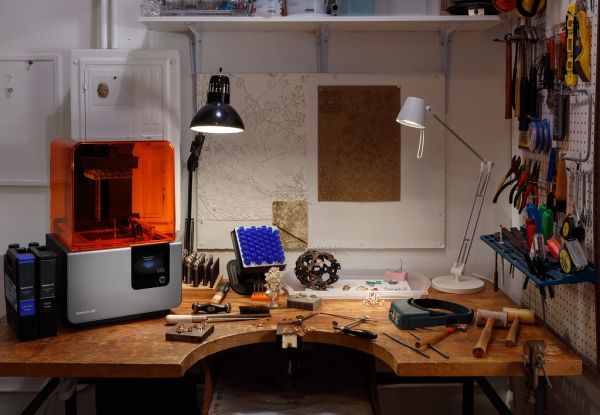
A part fresh off a photopolymer printer's plate isn't finished yet: it's tacky and not fully strong. Before it goes to a customer, it needs three steps — and each one costs time and consumables that are easy to forget to price in.
Three post-processing steps
- Washing. The part is cleaned of uncured resin — usually in isopropyl alcohol (IPA) in an ultrasonic bath; water works for water-washable resins. Ultrasound speeds up and improves washing compared to hand-rinsing.
- Drying. After washing, the part needs to fully dry off the IPA/water before the next step — otherwise curing comes out uneven.
- UV curing. The part is exposed in a UV station (or sunlight) to reach final strength — skip this and the plastic stays brittle and can warp.
What it actually costs
- Time. Each step takes anywhere from a few minutes to 20-30 minutes depending on part size and equipment power — time the printer isn't printing, but the maker is still spending on the order.
- Consumables. IPA evaporates and gets contaminated, so it's replaced periodically; gloves and wipes get used up, and sometimes the printer's FEP film wears from the resin chemistry and UV exposure (not part of post-processing directly, but a resin-related consumable too).
- Electricity. The ultrasonic bath and UV station draw power just like the printer does — same formula: wattage × time × rate.
How it affects cost
Post-processing deserves the same treatment as printing itself: ultrasonic bath and UV station time as separate equipment line items with their own depreciation and electricity, and IPA as a consumed material priced per milliliter. In 3D Print Pricing, inventory is already split into "Resins," "Ultrasonic baths," and "UV lamps/stations" shelves — resin cost calculations are built from the same building blocks as filament, just with a different set of line items.
Calculate your price in a minute
Free calculator: part weight, print time, material price — no sign-up needed.
 App Store
 Google Play
 RuStore
A common mistake
Skipping a separate post-processing calculation and folding it "by eye" into total print time — in practice this can be 15-30% of the time the printer isn't printing but the maker is still spending on the order, and that's exactly the share that gets lost when cost gets rounded down.