
August 1, 2026
Spare Parts and Warranty Strategy for a Growing Print Farm
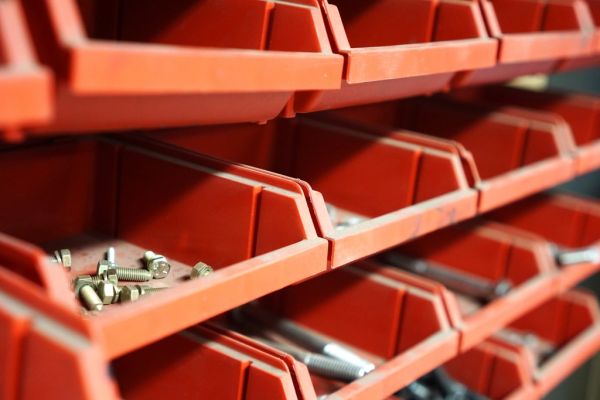
One printer breaking down is a minor annoyance you fix when you get to it. Ten printers breaking down, one at a time, on a schedule you can't predict, is an operational problem — and past a handful of machines, it's almost always the same handful of parts failing, over and over, across the fleet. Stocking for that pattern in advance is the difference between a five-minute part swap and a printer sitting idle for a week waiting on shipping.
What actually breaks
| Component | Failure mode | How often |
|---|---|---|
| Nozzles / hotends | Wear from filament, occasional clogs | Most frequent — a genuine consumable |
| Belts | Stretch and wear over time | Recurring, moderate frequency |
| Small parts (thermistors, fans, PTFE tubing) | Wear or sudden failure | Recurring, cheap, easy to overlook |
| Structural / electronic (mainboards, frames, stepper motors) | Rare, but costly when it happens | Rare, but expensive in downtime |
Nozzles and hotends wear out from ordinary use and occasionally clog outright — running abrasive or filled filament accelerates this considerably. Belts stretch and degrade with cycling, less dramatically but just as predictably. Thermistors, fans and PTFE tubing are cheap individually but fail often enough across a fleet that they're worth treating as a standing category rather than a surprise each time. Structural and electronic failures — a dead mainboard, a cracked frame, a burned-out stepper — are much rarer, but they're the ones that actually cost real money in downtime, since they're rarely something you have sitting in a drawer.
What to actually stock
Stock the cheap, frequently-needed items proactively, before they're the reason a printer is down:
- Spare nozzles — especially if any printer in the fleet runs abrasive filament regularly. A $5–15 nozzle sitting in a drawer beats three days of a printer sitting idle waiting for one to ship.
- Spare belts — cheap, prone to gradual wear, annoying to source on short notice if a supplier is out of stock locally.
- A small-parts kit — thermistors, hotend fans, PTFE tubing, a few of each, sized to the number of printers you're running.
The math is simple: a spare part costs a few dollars and sits on a shelf until needed. A printer sitting idle for days waiting on shipping costs whatever that printer would otherwise have earned during that window — usually many times the price of the part itself.
Calculate your price in a minute
Free calculator: part weight, print time, material price — no sign-up needed.
 App Store
 Google Play
 RuStore
Track warranty windows per printer
For newer machines, some of these repairs are still covered — but only if the warranty is actually tracked. Purchase date plus manufacturer warranty length, checked before paying out of pocket for a repair, is the difference between a free fix and an unnecessary bill. This is easy to track for one or two printers from memory and effectively impossible to track reliably for ten without recording it somewhere per machine.
Treat "what's down and why" as a tracked fact, not tribal knowledge
Below a certain fleet size, one person just remembers which printer has the sticky Z-axis and which one is still under warranty. Past that size, that stops working — and relying on it means downtime and warranty coverage both get missed because nobody wrote it down. Each printer in /3d-printers can carry its own history and notes in 3D Print Pricing — treating the fleet as a set of tracked entities rather than something held in someone's head is what actually scales past the point where memory does.
Bottom line
The recurring failures on a growing FDM fleet are predictable — nozzles, belts, and a handful of small cheap parts — even though exactly when they'll hit any given printer isn't. Stock ahead of that pattern instead of reacting to it, track each printer's warranty window so you're not paying for a repair the manufacturer owes you, and keep the fleet's status as a recorded fact rather than something only one person remembers.