
July 4, 2026
What Is SLA/LCD Printing and How Does It Differ From FDM
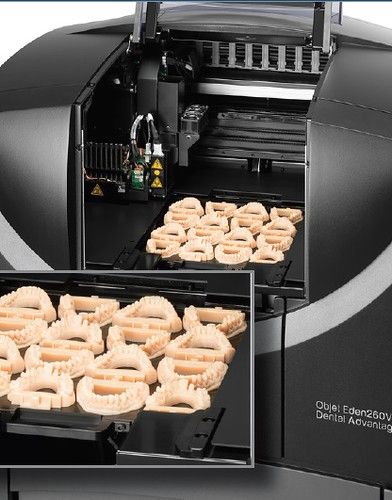
FDM (filament printing) and SLA/LCD (photopolymer resin printing) are two fundamentally different technologies, and the difference affects not just part quality but how you cost it.
How it works
An FDM printer melts plastic filament and lays it down in layers through a nozzle. An SLA/LCD printer, instead, cures liquid resin in a vat with UV light (a laser in classic SLA, or an LED matrix in LCD/MSLA) — the resin solidifies layer by layer from the bottom up. That's where the detail difference comes from: photopolymer gives a far smoother surface and fine detail without visible layer lines, but it requires an entirely different consumable and post-processing afterward.
Key differences from FDM
| FDM | SLA/LCD | |
|---|---|---|
| Consumable | filament (spool) | resin (bottle, liquid) |
| Detail level | medium | high |
| Post-processing | usually not needed | required (washing + curing) |
| Consumable toxicity | low | resin is toxic before curing |
| Build volume | usually larger | usually smaller |
| Typical use | functional parts, prototypes | miniatures, jewelry, dental |
Post-processing — the step FDM doesn't have
A part fresh off a resin printer is tacky and not fully strong until it goes through two mandatory steps:
- Washing — in isopropyl alcohol (IPA) or water (for water-washable resins), usually in an ultrasonic bath, to remove uncured resin from the surface.
- UV curing — in a UV station or sunlight, so the part reaches its final strength.
Both steps take time and consume IPA, water, or UV station life — a cost line item that simply doesn't exist for FDM printing.
How it affects cost
Pricing a resin part means accounting for, beyond material and printer depreciation: IPA/water used for washing, the time and electricity of the ultrasonic bath and UV station, and consumables like gloves and wipes. 3D Print Pricing has dedicated inventory shelves for this (resins, ultrasonic baths, UV lamps/stations) — they're costed the same way as filament and printers, just as separate line items in the calculation.
Calculate your price in a minute
Free calculator: part weight, print time, material price — no sign-up needed.
 App Store
 Google Play
 RuStore
Which one to pick
For a functional, large, or one-off part, FDM is almost always cheaper and faster. For detail, a smooth surface, or a small batch (miniatures, jewelry models, dental templates), the extra cost of resin and post-processing pays for itself in quality FDM can't reach.