
August 9, 2026
Disposing of Resin 3D Printing Waste: safety rules and what it actually costs
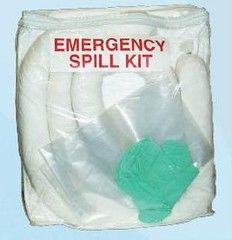
Resin printing gives a cleaner result than FDM, but it leaves behind waste that can't be treated like ordinary plastic scrap. Uncured liquid resin is toxic, and how you handle it after a print isn't a formality — it's a matter of safety for you, for anyone sharing your space if you run a home-based shop, and ultimately for your business's reputation.
Why liquid resin can't just be poured out
Uncured liquid resin is toxic to skin — a common cause of contact dermatitis for anyone who works with it regularly without gloves — and it's harmful to aquatic life if it reaches wastewater or soil. Unlike cured plastic, liquid resin is chemically reactive — that's exactly what lets it polymerize under UV light, and that same reactivity is what makes it a problem for water treatment systems and ecosystems if it's dumped as a liquid.
The rule is simple: liquid resin never goes down a drain, into a toilet, or into a regular trash bag.
How to properly dispose of leftover resin
Leftover resin — from the bottom of the vat, from failed prints still in liquid form, from a filter after straining — needs to be fully cured under UV light first (in a UV curing station, or just in sunlight if you have the time and space). Once fully cured, the resin becomes an inert solid plastic that can then be thrown away as ordinary solid waste, the same as a finished printed part.
The practical process:
- Pour the leftover resin into a clear container (a thin layer works best — UV penetrates more evenly and curing goes faster).
- Cure it under a UV lamp or in sunlight until it's fully hardened — the liquid needs to stop flowing and go solid all the way through, not just on the surface.
- Throw the hardened piece away as ordinary solid plastic waste.
For larger volumes of waste (a print farm replacing resin regularly, for example), check local disposal regulations — in some jurisdictions even cured photopolymer waste falls into its own category and needs to go through a hazardous waste collection point rather than the regular trash.
Spent IPA after washing
Isopropyl alcohol used to wash printed parts accumulates dissolved, uncured resin after a few uses — and for the same reason, it can't just be poured down the drain either.
A practical way to handle spent IPA:
- Let it settle in sunlight or under UV in a sealed, clear container — the dissolved resin gradually polymerizes and drops out as a solid.
- Filter out the solids — the hardened resin flakes get disposed of as solid plastic (see above), and the cleaned IPA can be reused for a while longer.
- Once the IPA stays cloudy and stops cleaning parts effectively even after settling, that's the signal to stop pouring it out and instead treat it as chemical waste — take it to a household hazardous waste collection point, or a specialized disposal service if volumes are regular and significant.
IPA is also highly flammable — store it in a tightly sealed container, away from open flames and heat sources.
PPE and ventilation
- Gloves — nitrile, not latex: latex holds up worse against some resins and solvents. Swap gloves as soon as resin gets on them rather than wearing the same pair through a whole shift.
- Safety glasses — splashes happen more often than expected when pouring resin or working around an ultrasonic wash tank.
- Ventilation — photopolymer resins release volatile compounds during curing and washing; working in an unventilated space regularly raises the risk of respiratory irritation even without an obvious sharp smell.
- Resin can trigger skin sensitization with repeated contact — meaning a reaction can stay dormant for months and then show up suddenly, recurring on every contact after that. That's a good reason not to treat gloves as optional "just this once."
How to price these costs in
Disposing of resin waste properly isn't free, and it deserves the same honest place in your pricing as material and print time:
- Gloves — count actual pairs used per shift or batch, not a rough guess.
- IPA — budget for washing, but also for the portion that gets written off as waste rather than fully used for cleaning parts.
- Time — curing leftover resin and letting IPA settle or filtering it takes only minutes per batch, but adds up to real hours over a month of regular printing.
- Disposal as a service — if your waste volumes already require a specialized disposal company, spread that cost evenly across orders rather than absorbing it as a loss each time resin or IPA gets replaced.
Calculate your price in a minute
Free calculator: part weight, print time, material price — no sign-up needed.
 App Store
 Google Play
 RuStore
If you haven't nailed down the washing and drying steps that come before this one, see the article on post-processing resin prints — disposal is the logical next step right after it.
Bottom line
Liquid resin and spent IPA aren't waste in the ordinary sense — they're materials that need to be neutralized first (UV curing) or properly sorted (settling and filtering) before you get rid of them. It's a few extra minutes per batch and small but regular spending on gloves and IPA — and it's exactly the kind of discipline that separates a shop operating safely and by the rules from one that eventually runs into trouble with neighbors, local authorities, or its own health.