
August 6, 2026
PLA vs PETG vs ABS vs ASA: how to pick the right filament for a print order
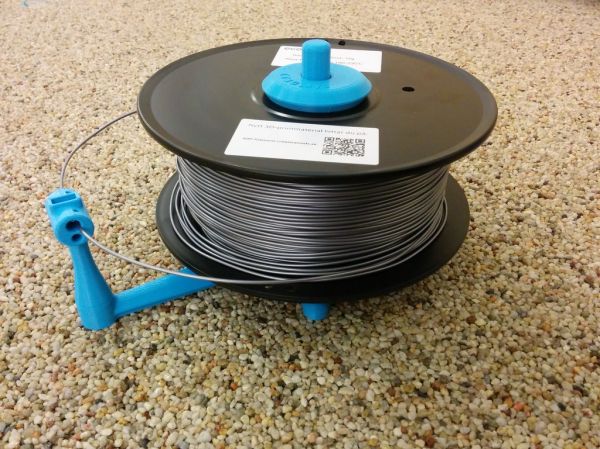
When a customer sends a model and asks to "print it cheap" or "make it strong", picking the filament isn't a matter of taste — it's a working decision that affects both the result and whether you'll end up reprinting the order for free. PLA, PETG, ABS and ASA cover most of the orders a small print shop sees, but each comes with its own set of trade-offs.
The four materials, briefly
- PLA — the easiest material to print: low shrinkage, no need for a bed hotter than 50-60 °C, no enclosure required, barely warps. Prints at 190-220 °C. The downside is low heat resistance (it starts softening around 55-60 °C) and brittleness under impact.
- PETG — glycol-modified PET, prints at 220-250 °C on a 70-80 °C bed. Noticeably tougher and more ductile than PLA, handles moisture and temperature swings better, takes impacts well. The downside is a tendency to string if retraction isn't tuned, and it sags on bridges and overhangs without good cooling.
- ABS — the classic choice for functional parts: prints at 230-260 °C, bed at 90-110 °C, an enclosure is strongly recommended or large flat parts tend to warp. Heat resistance is noticeably higher than PLA or PETG (glass transition around 100 °C). It gives off a distinct styrene smell while printing, so ventilation matters.
- ASA — mechanically and thermally almost identical to ABS, but with UV stabilizers: it doesn't yellow or turn brittle in sunlight. Also needs an enclosure to avoid warping, but smells noticeably less than ABS while printing. Costs more than ABS, which is justified for anything that will live outdoors.
Which orders each material usually fits
- PLA — decor, tabletop figurines, one-off prototypes just to check a shape, gifts. Anywhere the part isn't mechanically loaded and won't sit in the sun or in a hot car.
- PETG — the default all-rounder for anything that needs to be sturdier than decor but doesn't require high heat resistance: brackets, organizers, lids, lightly loaded mechanical parts, food-contact items (food-safe certified PETG filament is easier to find than food-safe ABS).
- ABS — functional parts that heat up or take friction: electronics enclosures near a heat source, small automotive interior parts, mechanical joints where impact resistance at room and elevated temperature matters.
- ASA — everything ABS does, but outdoors or in direct sunlight: signage, camera mounts, garden decor, exterior automotive parts.
If a customer's part will sit on a sunny windowsill or in a garden, that's almost always a reason to suggest ASA instead of ABS, even if the price difference gives them pause — PLA and plain ABS yellow and crack under UV over time, and the reprint request lands on the print shop, not the customer.
What to flag with the customer before printing
- Shrinkage and dimensional accuracy. ABS and ASA shrink noticeably more on cooling than PLA — if a part needs to fit into an assembly with a tight tolerance, say so upfront instead of explaining it after the fact.
- ABS smell while printing. If printing happens somewhere people are nearby (a home-based shop, a coworking space), it's worth saying upfront that an ABS order will be printed with ventilation running and possibly outside your usual hours — better to settle this before printing starts than after a complaint.
- Bridges and overhangs on PETG. If the model has long unsupported bridges, warn the customer that PETG can string or sag without strong cooling — either add supports up front or suggest PLA for that specific geometry.
- Temperature limits in use. Ask explicitly where the finished part will live — this matters for anything near heaters, cars in summer, dishwashers. Getting this wrong is the single most common cause of "the part warped" complaints.
How material prices compare
Prices depend heavily on the brand, but for standard basic filaments the rough range looks like this:
PLA:   cheapest of the four
PETG:  roughly 20-40% above PLA
ABS:   similar to PETG, brand-dependent
ASA:   usually the most expensive, due to UV-stabilizing additives
The gap between PETG and ABS is often small and driven more by the specific brand than by the material itself. When pricing an order, use the actual spool price of the material you're printing rather than a rough estimate — otherwise margins on recurring ABS or ASA orders quietly erode over time.
Calculate your price in a minute
Free calculator: part weight, print time, material price — no sign-up needed.
 App Store
 Google Play
 RuStore
If an order calls for a reinforced (carbon- or glass-filled) version of any of these plastics, budget separately for nozzle wear from abrasive filament — it wears out an order of magnitude faster than on plain PLA or PETG, and it's its own line item in the cost.
Bottom line
There's no single "correct" filament — only the right one for a specific order. PLA covers decor and one-off pieces, PETG is the workhorse for most functional parts that don't need high heat resistance, and ABS/ASA cover anything that has to survive heat or sunlight. Flagging material limitations with the customer before printing, rather than after, is what keeps reprints and quality disputes to a minimum.